
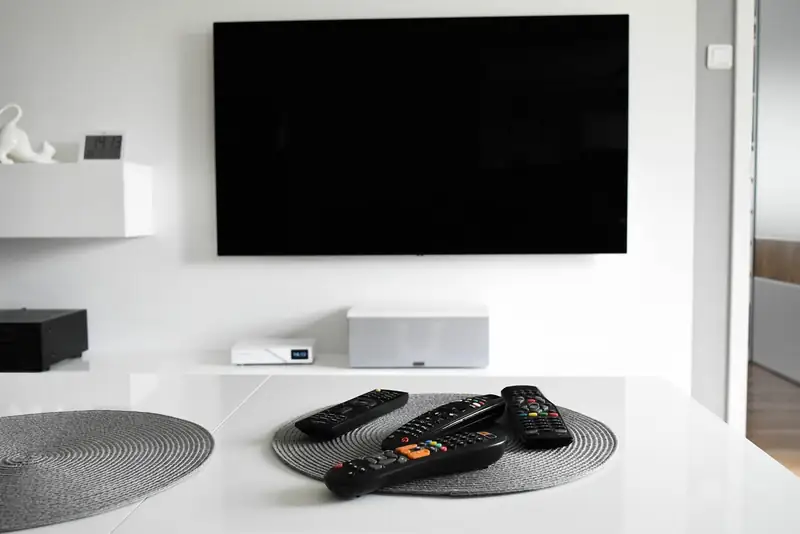
Yes, a TV can go above a gas fireplace, but only when the wall where the screen will hang stays within the temperature the TV is built to run in. Whether it does depends on the type of fireplace, how the heat is directed away from the wall, and how high the TV ends up. With gas fireplaces in Las Vegas homes being switched on for the season and new TVs arriving from holiday sales, this is the right moment to check the wall before anyone drills into it.
Vented, direct vent or ventless: why the fireplace type decides
Not every gas fireplace puts the same heat onto the wall above it. Valor, a gas fireplace manufacturer, explains that a vented fireplace sends some of its heat out through the chimney, a sealed direct vent unit manages heat differently again, and a ventless unit pushes more warmth into the room and up the fireplace wall. The same source puts a typical gas fireplace at between 20,000 and 35,000 BTUs of heat output per hour, which is a lot of warmth rising toward the spot most people want a TV.
So the first question for a TV above a gas fireplace is simple: which kind of fireplace is it? The model name is usually on a rating plate behind the lower grille or in the original paperwork, and it tells you which installation manual applies.
What the fireplace manual and the TV warranty say
The gas fireplace installation manual lists the clearances that combustible and heat sensitive materials need above the unit. Valor notes that ignoring those clearances puts the TV at risk and can void the fireplace warranty. Heatilator, another fireplace maker, says to follow both the fireplace manual and the TV manufacturer's specifications, and to err on the generous side when unsure.
On the TV side, Valor reports that most TV manufacturers rate their products for operating temperatures up to about 100 to 104 degrees Fahrenheit. The exact figure for your TV is in its manual or on the maker's support page, listed as operating temperature. A screen that runs hotter than its rating for hours at a time is the main risk of mounting a TV above a gas fireplace, and heat damage is not something a TV warranty is written to cover.
A simple heat test before anything goes on the wall
Measure the wall before the TV goes up. A thermometer on the wall tells you more than any rule of thumb:
- Run the fireplace the way you actually use it: the usual flame setting, for a few hours, on an evening when the room is closed up.
- Measure where the TV will be: at the center and the top edge of the planned screen position, not just near the fireplace opening. Heat collects higher on the wall.
- Compare against the TV's operating temperature: if the reading gets close to the rating in the manual, the TV needs a mantel, a recess, a different height or a different wall.
- Feel the wall itself: if the drywall above the fireplace is uncomfortable to keep a hand on, the TV would be living in that heat every time the fireplace runs.
Quick check: if the fireplace is ventless, or if the wall above it reads warm before the TV is even up, treat the space above the fireplace as a heat zone and plan the TV around it, not on top of it.
Mantels, recesses and pull down mounts
Heatilator lists two ways to redirect heat away from a TV above a fireplace: a proper mantel, or a built alcove for the TV. Valor adds a caution: a mantel can deflect heat slightly, but a shallow mantel at the wrong height does almost nothing. A decorative shelf is not a heat shield, so the mantel needs to be deep enough and close enough to the fireplace opening to actually throw heat out into the room.
Height is the other half of the decision. A TV above a gas fireplace usually sits well above seated eye level, which is hard on necks during a long game or movie. Valor suggests a tilting mount when the TV has to go high. A pull down mount goes further: the TV rests up out of the heat when the fireplace is on, then lowers toward eye level for viewing. Pull down mounts are heavy and need solid framing behind them, which matters on a fireplace wall that may have masonry, metal framing or a vent chase behind the drywall.
Hiding the power and HDMI cables inside the wall
Cables hanging down over a fireplace look worse than almost anywhere else, so most homeowners want them inside the wall. The rule to know is that the TV's own power cord, or an extension cord, cannot simply be pushed through the drywall. Mount-It, a TV mount maker, points out that the National Electrical Code (NEC 400.12) does not allow flexible cords inside walls. The usual fix is a recessed in-wall power kit, which links a box behind the TV to a box lower on the wall with wiring made for that purpose, or a new outlet added behind the TV.
HDMI and other low voltage cables have their own rule: they should be in-wall rated. Monoprice, a cable manufacturer, describes CL2 and CL3 rated cables as the types made for inside walls, with CL2 usually enough for HDMI runs. Look for the rating printed on the cable jacket. A fireplace wall can also hide a gas line, the vent pipe and fire blocking, so the cable path needs to be planned around what is actually behind the drywall before any hole is cut.
When the TV belongs on a different wall
Sometimes the honest answer is that the TV should not go above the gas fireplace. That is usually the case when the heat test reads close to the TV's rating, the fireplace is ventless, there is no room for a real mantel, or the only possible height leaves everyone looking up at the screen. An adjacent wall, a corner, or a built in beside the fireplace often gives a better picture and a longer life for the TV, and the fireplace stays the focal point it was designed to be.
If you just bought a larger TV, our guide to whether your wall can hold a big new TV covers studs and brackets for any wall in the house.
The Fix & Finish TV mounting and AV installation service covers the whole job above a gas fireplace in Las Vegas homes: checking the wall, choosing a fixed, tilting or pull down mount, and running power and in-wall rated cables so nothing hangs over the mantel. If you are deciding whether the TV should go above the fireplace or somewhere else, contact Fix & Finish and describe the room. You will get a straight answer before anything is drilled.